
Research Summary
Metabolism is spatially organized, yet we still know surprisingly little about how metabolic activity is coordinated across compartments, tissues, and organs.
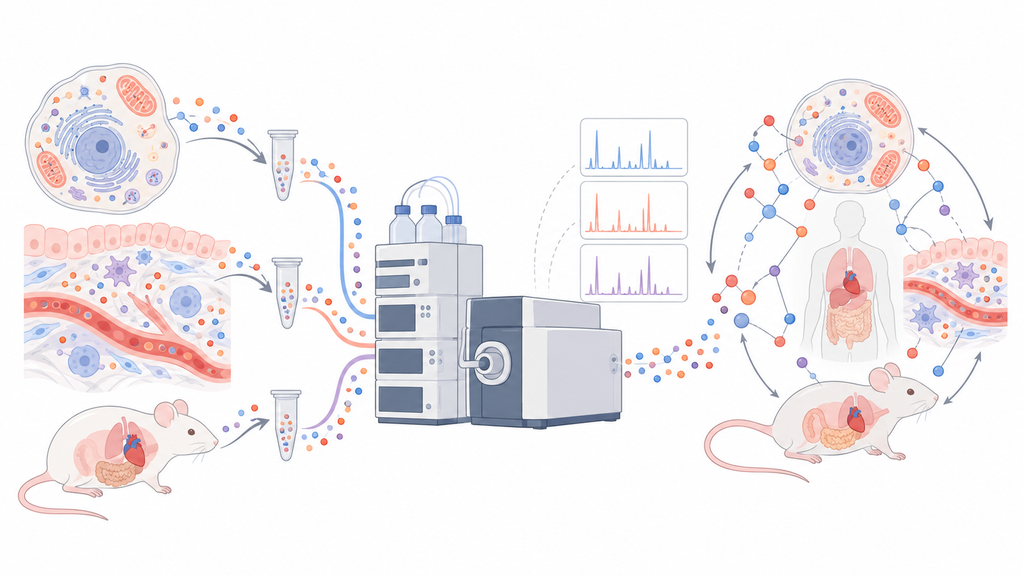
We investigate how this organization shapes metabolic flux across biological scales, from organelles to the whole organism, and how it enables physiological adaptation and resilience.
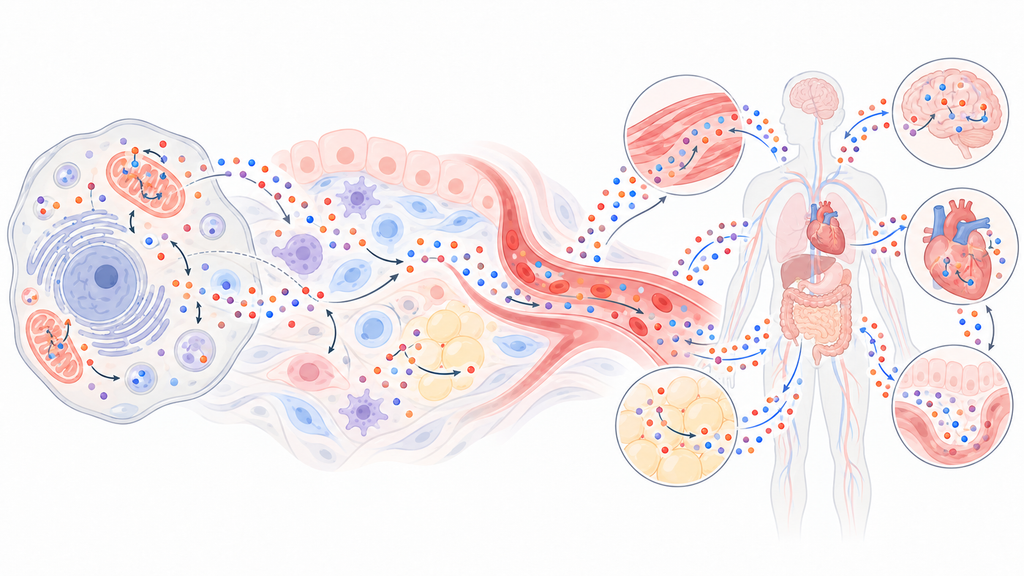
Where Metabolism Happens
Metabolite abundance alone cannot reveal where metabolic reactions occur or how rapidly they proceed.
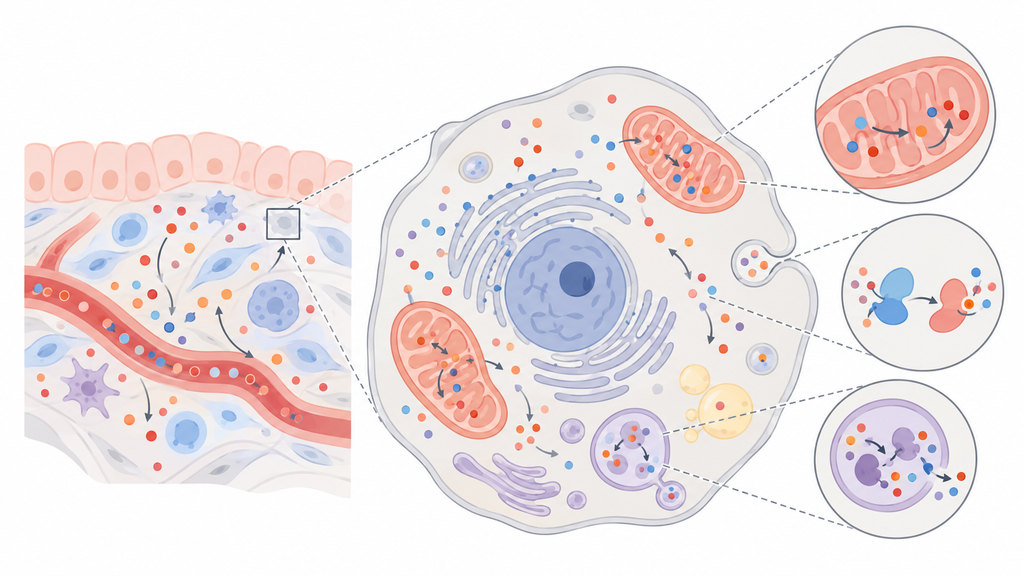
We develop spatial fluxomics approaches to measure metabolic activity within subcellular compartments and tissue microenvironments. By directly measuring metabolic flux where it occurs, we aim to understand how spatial organization shapes cellular and tissue function.
How Metabolism Connects
Metabolism is often measured locally, but physiology emerges from interactions across cells, tissues, and organs.
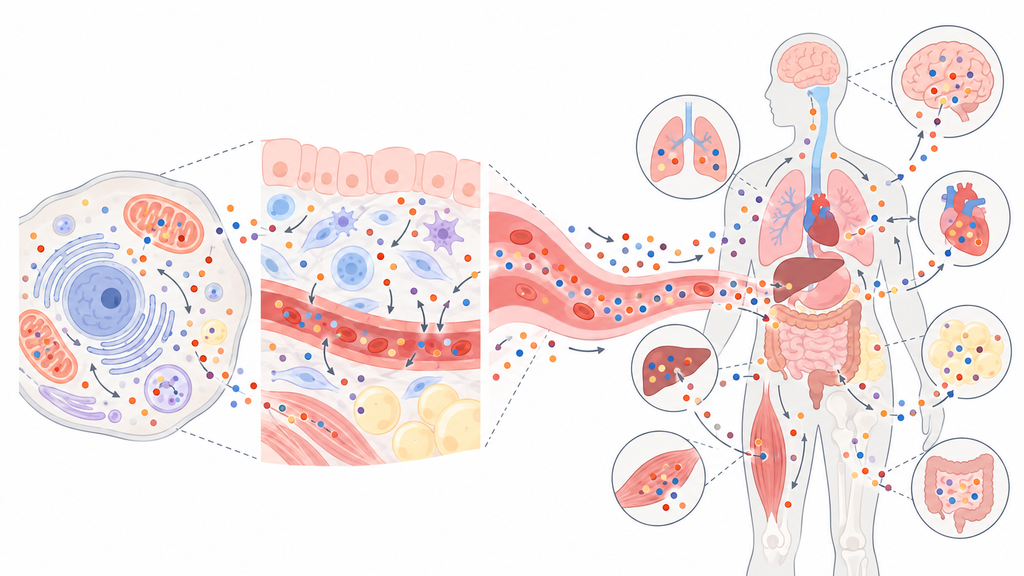
We investigate how metabolic processes are coordinated across cells, tissues, organs, and the circulation. Our goal is to understand how local metabolic changes propagate across biological scales to influence systemic physiology and homeostasis.
How Metabolism Adapts
Physiological stress can lead either to successful metabolic adaptation or to functional failure.
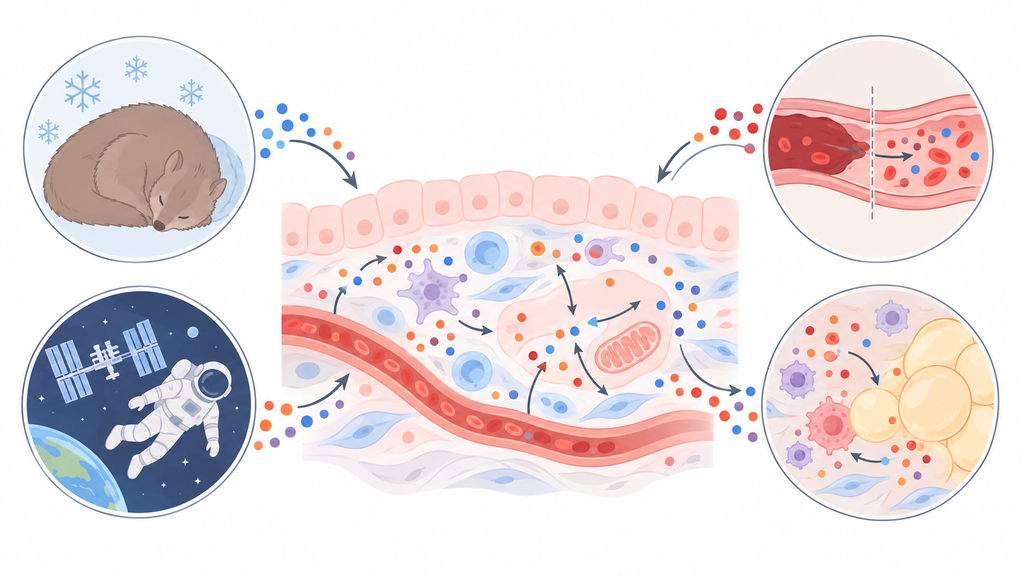
We use physiological and environmental perturbations to uncover how metabolic systems reorganize to preserve function under stress. Hibernation, microgravity, ischemia-reperfusion, and metabolic disease provide complementary models for identifying mechanisms of metabolic adaptation, resilience, and failure.
Collaborative Metabolism
We collaborate on biological questions that require quantitative measurements of metabolites and metabolic flux across subcellular, tissue, and organismal scales.
We work closely with collaborators from experimental design and isotope tracing strategy through quantitative analysis and biological interpretation.